
Spring Fever
Part I: slut/needs improvement

This is part 1/3 of the [long] second chapter of my memoir about getting diagnosed with severe ADHD as a teenager and the resulting fall-out. Read the first chapter here.
Part I: Slut
My mom was not wrong. Every year of junior high, a rare and dangerous strain of Spring Fever had overtaken me, or, as Mom had put it, I got a “bug up my ass.” Symptoms typically started around spring break and included acute restlessness, increased defiance of authority figures, and an uptick in general mischief. The affliction always culminated in some dramatic episode of acting out, usually during the last few days of school. I’d made quite a name for myself over the years with my Springtime Shenanigans.
The first episode came in mid-April of 1994, my sixth-grade year. Clara, one of my closest friends, pulled me aside in the hall before the last class period and reported in hushed tones that my ex-boyfriend, J.D. Green, the most popular boy in the sixth grade, had been calling me a slut to anyone who’d listen. When the word “slut” come out of Clara’s mouth, storm clouds of rage gathered in my heart, and I vowed to make J. D. regret his indiscretion. So, after school, with Clara in tow, I tracked him down on his way out to the school busses.
At the high school homecoming game about five months earlier, J.D. and I had French-kissed ten times while a crowd of about twenty other sixth graders watched, egging us on. “Do it again!” the boys had shouted. “It looks just like people kissing in the movies!” I’d heard one girl squeal. Most of those kids had never even pecked on the lips, let alone kissed with tongue. I, on the other hand, had been French kissing boys since the fourth grade, so it wasn’t a big deal to me. But I was new to this community, and I was about to discover that these Katy, Texas kids were of a much more Puritan bent than the ones I had left behind in Tomball, about 45 minutes to the north. It was all fun and games to me, and, frankly, I liked the attention.
I had just moved to Katy four months earlier, and there I was, French kissing the J.D. Green, who had dumped the former reigning pre-teen queen for me on the day he and I met at the church youth group skating-rink outing.
About a week after the homecoming game, J.D. had caved to pressure from my haters and dumped me, and as a fun bonus, everyone started calling me a slut. I heard it whispered in the halls as I passed, mumbled in classrooms with looks askance that averted as soon as I shot a look back that said, “Come say that to my face and see what happens.” I was eleven years old.
In the cafeteria on the way out to the busses that April afternoon, I spotted J.D. by his Big Dog T-shirt, too-long Wranglers, and formerly white Nikes, stained green from mowing lawns around the neighborhood. He’d already put on the Texas A&M cap he wore every single moment we weren’t in school. I shouted at his back, “J.D.!”
He turned around, his cheeks flushing pink as I approached.
“I heard you’ve been talking shit about me,” I said.
“What?”
“Did you call me a slut?”
He looked at his green shoes and said nothing.
“Did you?”
Finally, he blurted, “Well it’s not like it isn’t true. The only reason any guy ever goes out with you is to get some—” SMACK!
As soon as the words “goes out with you” reached my ears, I knew what was coming next. I reared back my right hand and swung it at J.D.’s face with all my might. I’d been fighting boys much longer than I’d been kissing them, so I knew how to land a good slap.
Clara gasped. The cafeteria went still. A kid passing by mumbled, “Whoa.”
J.D. regained his footing and swiveled his head back from whence my wallop had sent it. Activity in the cafeteria resumed, and the “whoa” mumbler scurried on his way. For a moment, J.D. looked like he might cry, but he sucked it up and muttered, “Bitch,” before sulking off to catch his bus.
For a minute, I felt bad, but I’d been stomaching the judgement and condemnation of my peers for months. J.D.’s insult hit a nerve, especially because, deep down, I wondered why he, an equal participant in the homecoming activities, had earned no such spicy reputation.
I, on the other hand, had endured heartache after heartache—like when a girl I’d recently befriended suddenly started avoiding me in the halls, turning up her nose and pretending not to hear my hallway greetings. When I lamented about it to Clara, she’d made an apologetic face and said, “Oh, yeah. Her mom says she’s not allowed to hang out with you anymore.” That one knocked the wind out of me. The idea that people’s parents paid attention to pre-teen gossip bewildered me and shattered the illusion that adults were oblivious to our little dramas.
J.D. had suffered no such gut punches. He’d gotten congratulatory slaps on the back from his guy friends, whose fathers probably chuckled about it when they heard. And now it was clear that J.D.’s stupid little friends had no more congratulations to offer him and they were all disparaging me behind my back. Nah, I didn’t feel bad at all.
As I watched him trudge to the bus lines, I hoped he’d learned his lesson.
When I got home, my mom read on my face that I was upset and asked me what was wrong. I told her I had gotten into “a fight” with J.D. and that I had slapped him. I watched her eyes narrow and her jaw clench, and I readied myself to spend yet another weekend alone in my room. But then something swelled in me, some sense that I had been wronged, and I told her what J.D. had said to elicit that slap. All at once, her face went from miffed to aghast.
“He said that to you?”
“Yeah.”
“And that’s why you slapped him.”
“Mm-hm.”
She squinted at me for a moment, then said, “Good,” and went back to balancing her checkbook, retreating into some unspoken memory from her girlhood days. I backed away slowly, lest she remember I was there and decide she was mad, after all. When I got out of my mom’s sight, I hurried up to my room to call Clara and tell her what my mom had said.
The day after the slap, Clara delivered a morsel of intel she’d gathered from someone in J.D.’s homeroom: J.D. was wearing makeup to cover a purple and green handprint on his left cheek. I don’t think that was true, but J.D. was a little scared of me from then on. So was most of the school, in fact.
My Spring Fever continued to climb.
At that point in my young life, I wanted to be a cheerleader more than just about anything in the world. I had been working my ass off all year: training in my “total tumbling” gymnastics class, which was geared specifically towards cheerleader wannabes; practicing my jumps relentlessly; and rehearsing the cheers I watched the seventh and eighth-grade cheerleaders perform at all the basketball and football games, which I attended as a member of the Pep Squad, another prerequisite for cheerleader hopefuls.
A couple of weeks after The Slap, report cards came out for the penultimate six weeks of the school year. Teachers always handed them out in first period, which was my World History class, taught by a cold and bookish man whom we all suspected was gay. We’ll call him Mr. Gayly. (It rhymes with his real name and describes how he did most things. That’s not an insult. His apparent gayness was my favorite thing about him.) Unlike my math teacher—let’s call her Ms. Dingus—Mr. Gayly never got visibly upset as he told me repeatedly to stop talking to my friends, Janie and Sarah—the two most popular girls in my grade—but as he handed me my report card that day, his expression seemed colder than usual.
A fierce dread clawed at my ribcage like a trapped honey badger.
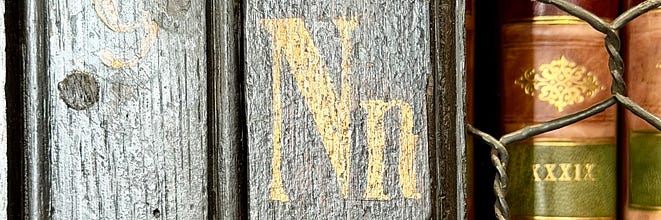
I tore off the end tabs at the perforation, whipped off the sheet covering the card, and scanned the column of grades. All As and Bs, except for one high C in Math. Not great, but not terrible, either. My eyes moved to the conduct column next to the grades, and there they were. Sitting among the pleasantly round esses for “satisfactory,” I found four angular aberrations: one E for “excellent” in Art; and three Ns—for “needs improvement”— in Science, Math, and World History.
A cold stone dropped onto my sternum.
I stared at the three Ns, the E below them doing nothing to staunch the blood pouring from the gashes to my heart, my dreams of being a seventh-grade cheerleader dashed upon those blade-like points. Those three spiky Ns officially disqualified me from trying out for the cheerleading squad.
My ears rang. My vision blurred. The room spun.
This also meant that if I wanted to try out the following year, I had to be in the Pep Squad again with all the incoming sixth graders. Barf.
I thought about the teachers who had given the offending marks: Mr. Gayly; Ms. Dingus, the math teacher; and my science teacher, whom shall be known henceforth as Mrs. Ass-face. Wait a second, I thought. Ms. Dingus and Mrs. Ass-face are the faculty cheerleading sponsors.
A second stone dropped onto my already flattened, slashed-up little heart. Had those devils sabotaged me?
Now, as an adult, it’s obvious: if I really wanted to be a cheerleader so badly, why hadn’t I behaved better in general, but particularly in Ms. Dingus’ and Mrs. Ass-Face’s classes, since they got the final say on who made the squad? Again, I was 11 years old. I did not yet realize that whether you get the job or not often hinges on how much people like working with you, maybe even more so than your talent or skill. And, frankly, I was a total demon in their classes. Why would they willingly saddle themselves with a preteen demon for three hours every day after school? I was too immature for that level of discernment, though, and I wonder if I was even capable of doing what I was supposed to in their classes, had I wanted to. Plus, they had labeled me a demon and written me off very early on in the school year. Mrs. Ass-face ignored and dismissed me, doing her best to pretend I didn’t exist, while Mrs. Dingus treated me with open contempt, flat-out glaring at me anytime I approached her desk. This did nothing to inspire cooperation on my part.
I decided the three teachers had definitely conspired to crush my dreams because they hated me and wanted to see me suffer. I choked back tears for the rest of the school day, brooding in self-pitying silence, especially in those three classes. Apparently, I could behave, as long as I was depressed.
I went home and tried to avoid showing my mom my report card, but because Jake had also gotten his and presented it immediately, there was no hiding my failure. When Mom saw the carnage and started in on her lecture, I burst into tears and bolted upstairs to my room. I switched on my boombox, tuned to 107.5 The Buzz, Houston’s now defunct alternative rock station, just as the opening strains of “Black Hole Sun” by Soundgarden began to play. The song matched my mood, and I found some small solace in this. I cranked up the volume, threw myself facedown onto the bed, and scream-cried into my pillow.
Watch out for “Part II: FOOD FIGHT!” dropping next week.
Beautiful work! I love how you describe the emotions you felt during this time. It’s raw and visceral!